
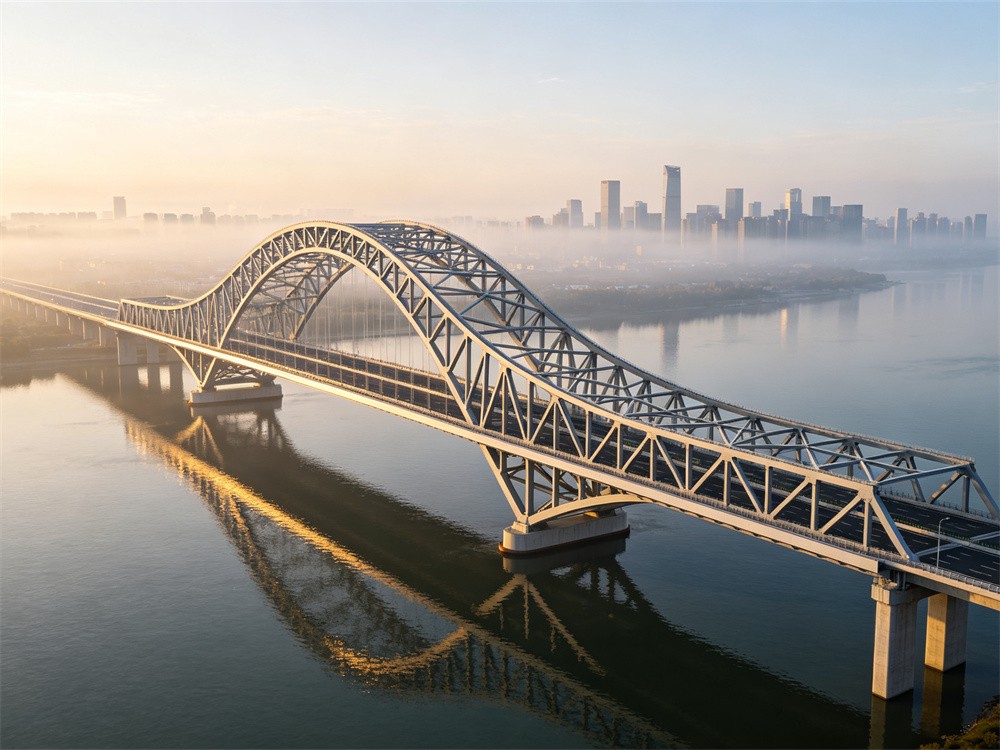
Applications and Construction Challenges of Long-Span Steel Venues
Large public venues are the core carriers of urban public facilities, covering numerous scenes such as sports venues, exhibition centers, performance venues, transportation hubs, exhibition halls, and viewing venues. These types of buildings generally have the construction needs of large spans, large spaces, novel shapes, and personalized appearances. Traditional concrete structures cannot meet the construction requirements of ultra long span column free spaces, while large-span steel structures have become the only preferred structural form for large-scale public venue projects due to their strong spatial plasticity, light weight, large spans, and flexible shapes. They are also the core construction technology for modern urban landmark buildings.
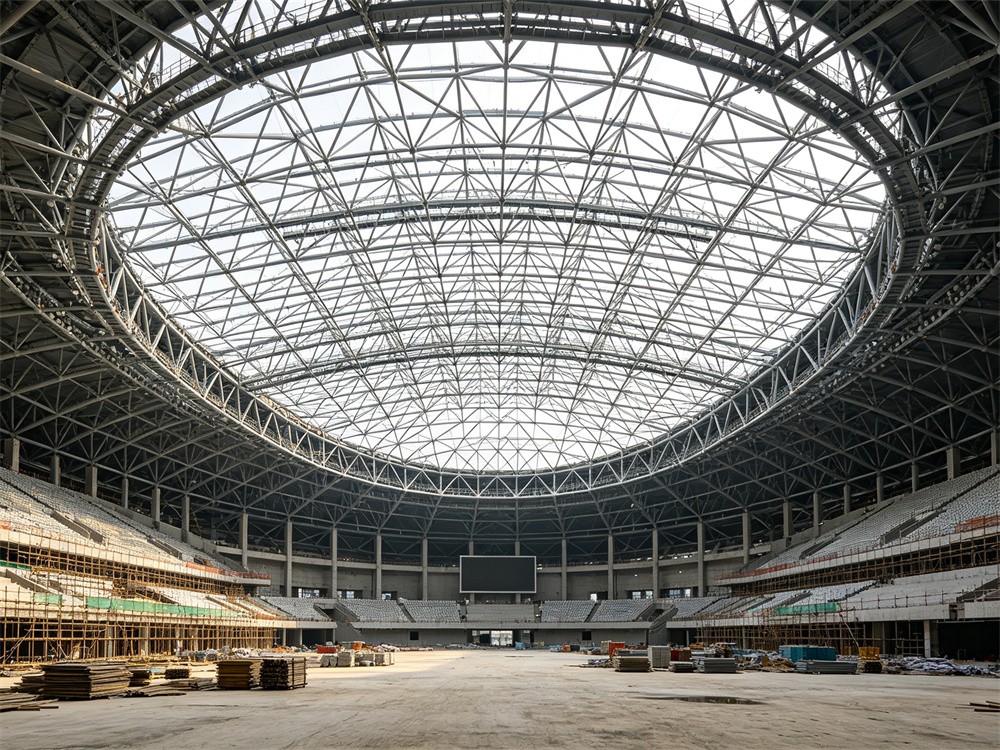
The large-span steel structure venue mainly adopts various structural systems such as grid structure, truss structure, suspension structure, and spatial grid structure, which can easily achieve column free large spaces of tens or even hundreds of meters. The interior of the venue has a wide and unobstructed view, which can perfectly adapt to various public use needs such as event hosting, exhibitions, cultural performances, and crowd gathering. At the same time, steel structures have strong plasticity and can create various personalized appearance shapes such as curved and irregular forms according to the architectural design scheme, balancing the practicality and artistic appreciation of the building, and meeting the needs of creating urban landmark buildings.
The core difficulty of large-span venue steel structure engineering lies in structural design and force balance control. The ultra large span structure is subjected to complex forces, and the overall load, wind load, snow load, and temperature difference deformation have a great impact on the stability of the structure. In the design stage, professional modeling and calculation are required to accurately analyze the overall force distribution, optimize the layout of the grid and truss, balance the overall stiffness and stability, and avoid structural deformation caused by uneven local forces. At the same time, venue buildings are mostly open and semi open structures, with higher requirements for waterproof, windproof, thermal insulation, and sound insulation design of roofs and curtain walls, which need to balance structural safety and functional use.
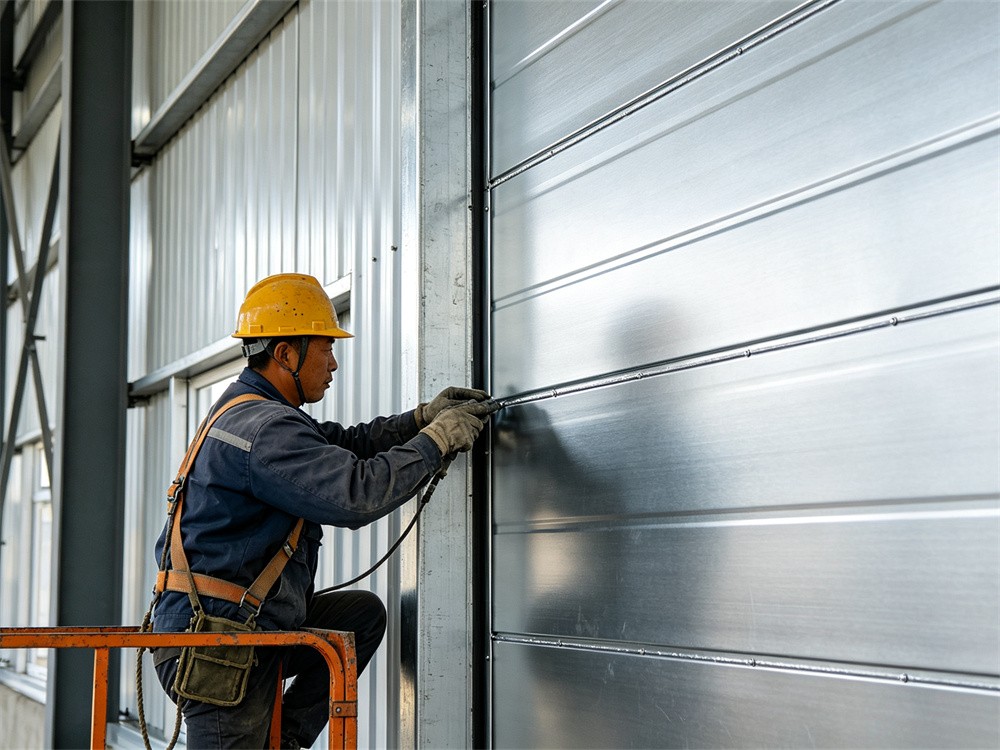
The precision of component production is the foundation of venue engineering quality. Large span venues have a large number of steel structural components, complex specifications, and a high proportion of irregular components. They require extremely high processing accuracy, welding technology, and assembly accuracy. Even small dimensional deviations can lead to on-site assembly misalignment, excessive gaps, and structural stress imbalance. Therefore, all components must be cut, welded, polished, and calibrated using precision equipment in a standardized factory, and non-destructive testing procedures must be strictly followed to ensure that the dimensional accuracy and structural strength of each component meet the standards, laying the foundation for on-site construction.
On site hoisting and overall assembly are the core and difficult points of construction. The roofs and top trusses of large-span venues are mostly super large and heavy components, which are difficult to lift and pose high risks for high-altitude operations. It is necessary to develop a special lifting plan in advance, plan the lifting sequence and assembly process, and adopt construction techniques such as segmented lifting, overall splicing, and synchronous correction to ensure the accuracy of assembly. At the same time, the steel structure nodes of the venue are complex and the welds are dense. All core nodes must be strictly inspected to ensure that the welding quality and bolt tightening accuracy meet the standards, and to ensure the stability and safety of the overall structure. In addition, public venues have a high flow of people and require far higher levels of fire prevention, earthquake resistance, and wind resistance than ordinary buildings. The entire construction process must strictly follow high standard safety regulations.
The large-span venue project belongs to high-end steel structure engineering, with high technical barriers, complex processes, and strict requirements for the comprehensive strength of enterprises. Hongsheng Steel Structure Group is a large-scale enterprise engaged in the production of steel structural materials and construction of steel structures, with subsidiaries both domestically and internationally. The group has customized production capabilities for large-scale irregular steel structures and large-span grid truss components, with precision machining equipment and professional testing systems, capable of accurately completing the production and manufacturing of various complex venue components. We have a senior venue engineering design and construction team, with years of experience in the field of large-span steel structures. We are proficient in the design optimization, lifting construction, and node control of various venue structural systems, and can undertake various high-end public building projects such as sports venues, exhibition centers, and transportation hubs. Relying on the global layout of domestic and overseas subsidiaries, we not only serve the construction of landmark venues in domestic cities, but also undertake large-scale public steel structure venue projects overseas, adapt to building safety standards in various countries, and create high-quality landmark projects.
With the continuous upgrading of urban public facilities, the demand for personalized, large-span, and high-value steel structure venues continues to grow. Only by relying on the integrated strength of production, design, and construction in the entire industry chain can we overcome the technical difficulties of large-span steel structure engineering and create safe, beautiful, and durable urban landmark buildings.
Related Questions and Answers
Q: What problems can develop in large-span steel venues over time, and how can they be prevented?
Answer: Common problems mainly include roof leakage, slight structural deformation, and aging and rusting of coatings. Preventive measures: Strictly control the roof joint sealing and node waterproofing process during the construction phase; Accurately control the assembly accuracy and balance the structural stress; Regularly conduct inspections and repairs of anti-corrosion coatings, monitor structural deformation, promptly address minor hazards, and ensure long-term safe use of the venue.
Discuss Your Project with Us
If you have questions about steel structures or would like to discuss a project, please leave your contact details.