
Corrosion Protection and Construction Requirements for Marine Steel Structures
Marine engineering steel structures are the core load-bearing system of port terminals, cross sea bridges, offshore platforms, coastal walkways, coastal venues, and offshore wind power supporting buildings. They are exposed to extreme corrosive environments such as high humidity, high salt spray, strong sea winds, and large temperature differences between day and night for a long time. Compared to ordinary steel structure buildings in inland areas, the corrosion rate of steel in marine environments is 3 to 5 times that of ordinary atmospheric environments. Salt spray will continue to erode the surface and internal structure of steel, which can easily cause problems such as coating peeling, steel corrosion, loss of component cross-sectional area, and damaged nodes, seriously affecting the safety and service life of steel structure engineering. Therefore, exclusive heavy-duty anti-corrosion technology and standardized construction specifications are the core guarantees for the long-term safe operation of marine steel structure engineering.
The corrosion types of marine steel structures are complex and diverse, mainly divided into four categories: salt spray atmospheric corrosion, seawater splash zone corrosion, seawater immersion corrosion, and tidal alternating corrosion. Among them, the corrosion degree in splash zone and tidal zone is the most severe. The steel structure in the splash zone frequently comes into contact with seawater droplets, with frequent dry wet alternation, rapid salt accumulation, and extremely high corrosion rate; The steel structure in the immersion zone is exposed to seawater for a long time, and is susceptible to corrosion by seawater salts and marine microorganisms, making the steel prone to electrochemical corrosion; The coastal atmospheric zone is subject to long-term salt spray floating erosion, slowly losing the protective coating. The working conditions in different corrosion areas vary greatly, and a single anti-corrosion solution cannot be applied. It is necessary to design a targeted zoning protection system.
Raw material pretreatment is the foundation for anti-corrosion of marine steel structures. For specialized steel components in marine engineering, high standard shot blasting or sandblasting rust removal processes must be used to thoroughly remove the oxide scale, rust, oil stains, and impurities on the surface of the steel, ensuring that the steel surface reaches the specified roughness, guaranteeing a tight bond between the anti-corrosion coating and the steel, and preventing later coating blistering and delamination. Compared to ordinary steel structure rust removal standards, marine engineering has higher rust removal accuracy and stricter requirements for surface cleanliness, avoiding the problem of weak coating adhesion from the source.
The multi-layer heavy-duty anti-corrosion coating system is the core protective measure for marine steel structures. Conventional inland steel structures adopt a three-layer coating system, while marine environment steel structures require a multi-layer heavy-duty anti-corrosion combination process, generally consisting of primer, intermediate anti-corrosion paint, topcoat, and weather resistant protective layer. Some high corrosion core areas require thicker coatings or specialized anti-corrosion processes. Select a special primer with strong adhesion and excellent rust prevention performance to block electrochemical corrosion of steel; Thickening the middle layer paint for protection, enhancing the impact resistance and penetration resistance of the coating, and isolating salt spray and seawater penetration; The topcoat is selected as a specialized marine topcoat that is resistant to salt spray, ultraviolet radiation, and aging, to resist the erosion of sea breeze, sun exposure, and salt spray. For core components such as offshore platforms and dock pile foundations, composite anti-corrosion processes such as hot-dip galvanizing, zinc aluminum coating, and cathodic protection will also be used to build multiple protection systems.
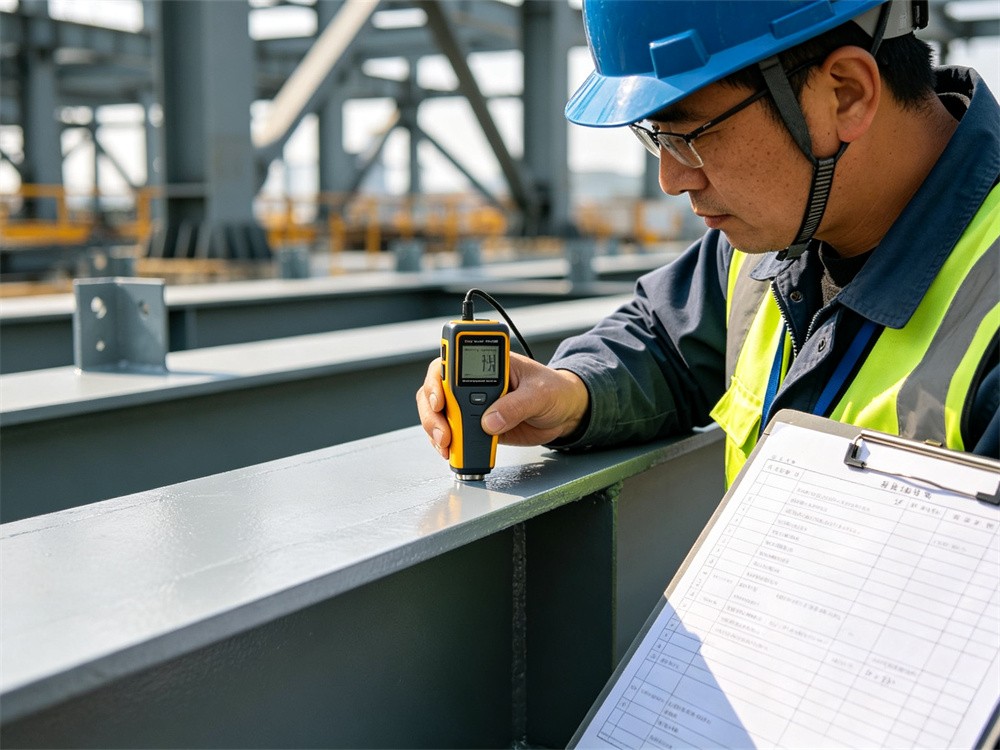
The final effect of anti-corrosion engineering is determined by the construction environment and detail control. Marine anti-corrosion construction has extremely high environmental requirements. Construction is strictly prohibited in rainy, high humidity, strong winds, and heavy salt spray weather to avoid water vapor and salt mixing into the coating, which may affect the protective effect. Vulnerable areas such as component welds, bolt interfaces, hard-to-reach corners, and splicing gaps need to be manually repaired and reinforced in advance to address gaps in corrosion protection. All coating construction must strictly control the thickness uniformity. After completion, coating thickness and adhesion testing should be carried out to ensure that the heavy-duty anti-corrosion system fully meets the standards. At the same time, after the completion of marine steel structure engineering, it is necessary to establish a regular inspection and maintenance mechanism, regularly check the aging, damage, and corrosion of coatings, and carry out repairs and maintenance promptly.
Marine steel structure engineering has high technical standards, high construction difficulty, and low fault tolerance. Only enterprises with professional heavy-duty anti-corrosion technology, large-scale component production capacity, and rich experience in marine engineering can ensure engineering quality. Hongsheng Steel Structure Group is a large-scale enterprise engaged in the production of steel structural materials and construction of steel structures, with subsidiaries both domestically and internationally. The group has been deeply involved in coastal and marine steel structure engineering for many years, proficient in the design of heavy-duty anti-corrosion solutions and standardized construction processes for various marine conditions. It can customize differentiated composite anti-corrosion systems for different corrosion environments such as atmospheric zones, splash zones, and immersion zones. Our own production base can complete high-precision processing and pre-treatment anti-corrosion of marine specific steel components, controlling the quality of protection from the source. Relying on the layout of domestic and overseas subsidiaries, we undertake domestic coastal ports, cross sea projects, and steel structure projects for coastal venues. At the same time, we adapt to overseas marine engineering construction standards and implement overseas coastal steel structure infrastructure projects to provide full cycle protection for marine steel structure engineering.
The anti-corrosion protection of marine steel structures is a systematic and long-term project. With refined process design, standardized construction control, and regular maintenance, it can effectively resist extreme corrosive environments in the ocean, greatly extend the service life of marine steel structure engineering, and ensure the long-term safe and stable operation of infrastructure projects.
Related Questions and Answers
Q: How many years can heavy-duty anti-corrosion coatings be used for marine steel structures?
Answer: Under the premise of standardized construction and regular maintenance, the conventional marine heavy-duty anti-corrosion coating system can be used for 10 to 15 years, and with the combination of hot-dip galvanizing and cathodic protection composite anti-corrosion system, the service life can reach more than 20 years. If the construction process does not meet the standards and lacks maintenance, coating aging and corrosion problems will occur within 3 to 5 years.
Discuss Your Project with Us
If you have questions about steel structures or would like to discuss a project, please leave your contact details.